


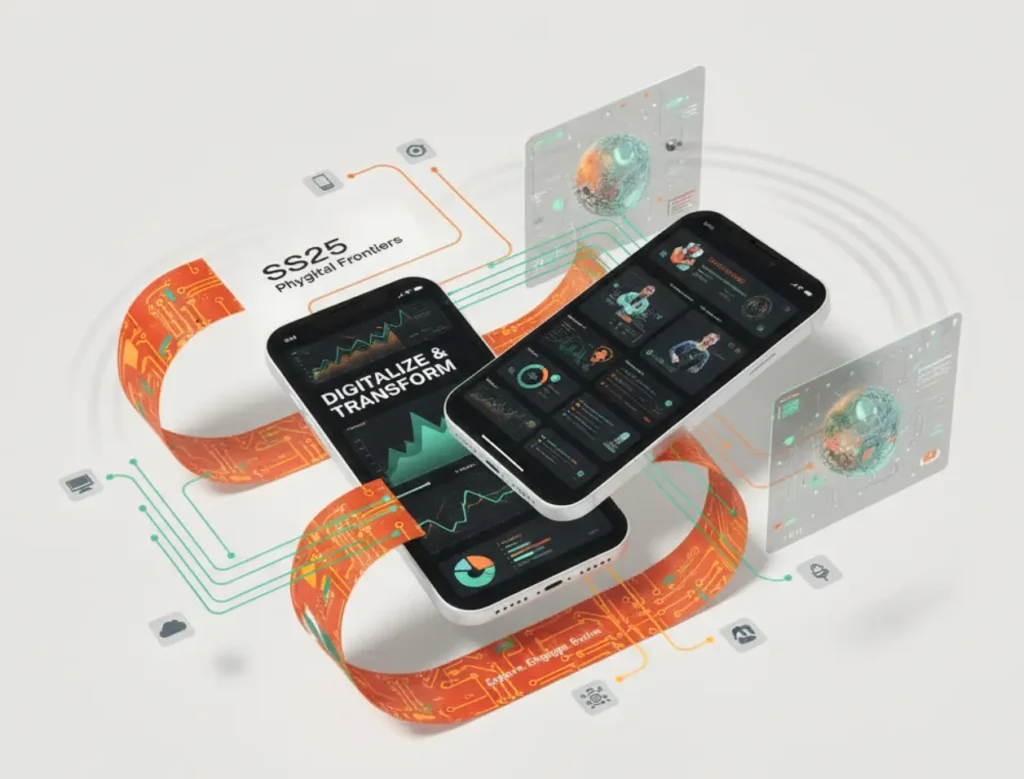
The phygital trend is redefining retail by bringing together the best of the in-person environment with the possibilities of the online world. The result is a more seamless, personalized, and consistent phygital retail experience for an increasingly demanding shopper. In this article, you will discover how phygital in retail allows for the fusion of the physical and digital worlds, why it has become the future of retail, and how to apply this vision practically in a real business, from a local store to major brands in the retail sector.
Throughout the text, we explore the phygital concept, real-world examples, technology, strategy, and keys to improving the customer experience without losing profitability or brand consistency. If you’re interested in understanding where phygital retail is headed and how to transform your business, keep reading.
What is phygital retail and why is it changing the sector?
When we talk about what phygital retail is, we refer to a model that naturally integrates the physical and digital within a single purchasing process. The term phygital refers to that frictionless union between physical and digital presence, where the customer perceives no jumps or inconsistencies between channels.
In the world of retail, this approach emerges as a response to new consumption habits. Today’s shopper researches online, compares prices, visits the physical store, goes back online, and expects everything to be connected. Phygital is not a passing fad, but a logical evolution of the market.
Phygital experience: beyond selling, creating real value
The phygital experience goes far beyond placing screens in a store. It’s about creating a consistent experience that combines the physical environment with digital tools to offer a memorable shopping experience.
Here, the focus is on improving the experience, reducing friction, and adding value at every touchpoint. From a smart fitting room to interactive content accessible via QR codes, the goal is for the customer to feel that the brand understands their needs and accompanies them throughout the entire journey.
Physical store and digital in retail: rivals or allies?
For years, the dichotomy between the physical store and e-commerce was posed, as if one had to replace the other. The phygital approach breaks with this simplistic vision and proposes a hybrid model where both channels reinforce each other.
Digital in retail allows for expanded information, personalized offers, and facilitating online purchase, while the physical space provides trust, sensory experience, and human contact. Together, they create a much more powerful physical and digital experience than they do separately.
Phygital model: how it works in practice
A well-designed phygital model integrates systems, data, and processes. The POS system, inventory, promotions, the point of sale, and digital channels must speak the same language.
For example, a customer can start a purchase online, continue it in-store, and finish it from home. Phygital allows the customer to choose how, when, and where to interact with the brand, without artificial barriers.
Phygital technology applied to digital retail
Phygital technology is the engine that makes this integration possible. We’re talking about augmented reality, virtual reality, recommendation systems, advanced analytics, and retail design solutions designed to unite the digital and the physical.
These tools enable immersive experiences, personalized experiences, and a much richer user experience. Well applied, technology doesn’t distract, but rather accompanies and facilitates the purchase decision.
Omnichannel vs. phygital approach: a key difference
Although they are often confused, omnichannel and the phygital approach are not exactly the same. Omnichannel focuses on being present across multiple channels; phygital goes one step further and seeks to truly integrate them.
In a phygital strategy, the objective is to provide a continuous experience, where the customer has the feeling of having a unique experience, regardless of the channel used. Here, the customer experience takes precedence over the company’s internal structure.
Hybrid shopping experience: the new consumer standard
The hybrid shopping experience combines the best of the physical and digital worlds. The shopper expects to be able to get information in the digital world, touch the product in the physical space, and receive post-sale support online.
This type of seamless shopping experience improves brand perception, increases loyalty, and strengthens the long-term relationship with the customer. It’s not about selling more today, but about building trust for tomorrow.
Phygital strategy in the retail business: where to start
An effective phygital strategy starts with understanding the customer and the retail sector in which the brand operates. Not all solutions work for everyone. The first step is to analyze the objective of phygital within the retail business: improving conversion? optimizing processes? differentiating?
From there, a marketing strategy aligned with digital transformation is defined, prioritizing actions that truly add value and not just technology for the sake of fashion. The focus must always be on transforming your business with purpose.
Cases and examples of phygital in retail in Spain
Retail in Spain already has interesting examples of phygital in retail, especially in large cities. Phygital retail initiatives in Madrid show how to integrate products and services, data and experience to connect with the customer.
These brands understand that the phygital world is not the distant future, but the present. The key is to adapt the solution to the local context and the type of audience, maintaining a clear and consistent phygital vision.
The future of retail: towards increasingly integrated experiences
Looking at the future of retail, everything points to greater integration of the physical and digital. The phygital trend will continue to evolve towards smarter, predictive, and user-centric experiences.
The challenge will not be technological, but strategic: knowing how to use digital to offer an experience, not just to optimize costs. Whoever understands this first will have a competitive advantage in an increasingly complex and demanding retail world.
In summary: keys to understanding phygital retail
- Phygital unites the best of the physical and digital worlds in a single experience.
- Retail is evolving towards hybrid, customer-centric models.
- The phygital experience in retail reduces friction and improves brand perception.
- Technology, data, and design must be at the service of the experience, not the other way around.
- Success depends on a clear, realistic phygital strategy aligned with the business.
- The future of retail belongs to those who know how to integrate, not to those who only accumulate channels.
Discover how the phygital approach in your business can make a difference and turn every interaction into a real opportunity for connection with your customers.